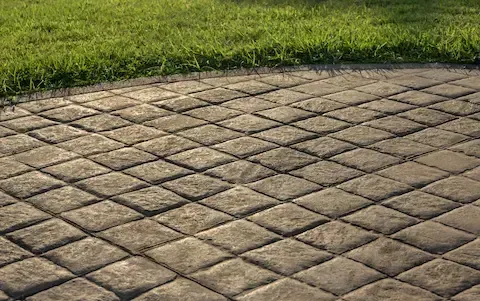
Stamped Concrete Durability in PNW Rain: West Linn
Stamped concrete can hold up well in West Linn's wet Pacific Northwest climate when it is properly installed and sealed. The main threats are water infiltration, freeze-thaw cracking, and UV-related sealer degradation. A quality penetrating or film-forming sealer applied every two to three years is the single most important factor in long-term durability. Concrete that was poured with adequate thickness, proper reinforcement, and correct drainage slope will resist Oregon's heavy rainfall seasons far better than work cut on material or labor. With routine maintenance, stamped concrete patios and driveways in West Linn regularly last twenty years or more.
Does PNW Rain Damage Stamped Concrete?
Rain itself does not damage stamped concrete directly. The risk comes from water that penetrates an unsealed or cracked surface and then expands during freeze-thaw cycles. West Linn sits at an elevation range where overnight temperatures drop below freezing during December through February, even if snowfall is light. Water trapped in surface pores expands roughly nine percent when it freezes. Over repeated cycles, that expansion creates micro-fractures that worsen each season. A properly applied sealer prevents water from entering the slab in the first place, breaking that cycle before it starts.
What Makes West Linn's Climate Particularly Challenging?
West Linn receives roughly 47 inches of rain annually, concentrated heavily between October and April. Unlike drier inland climates where stamped concrete faces primarily UV stress, the West Linn environment creates sustained moisture exposure for six or more consecutive months. The Tualatin River corridor and hillside neighborhoods above Willamette Drive also experience ground saturation that can push moisture upward through the slab if vapor barriers were not installed. In shaded areas common on wooded lots near Mary S. Young State Park, sealers break down more slowly from UV but face more moss and algae growth, which holds moisture against the surface and accelerates sealer wear at the edges of stamped patterns.
How Often Does Stamped Concrete Need Resealing in Oregon?
In the Pacific Northwest, plan on resealing stamped concrete every two to three years for a film-forming acrylic sealer, or every three to five years for a penetrating silane-siloxane sealer. High-traffic driveways on the shorter end of that range, and patios with overhead cover on the longer end. You can test sealer integrity by sprinkling water on the surface. If the water beads and rolls off, the sealer is still working. If the water darkens the concrete and absorbs, it is time to reseal. Waiting too long allows surface color to fade and stamped pattern edges to soften from abrasion and freeze damage.
What Type of Sealer Works Best for West Linn Conditions?
For most residential applications in West Linn, a solvent-based acrylic sealer provides strong color enhancement and reliable water resistance. Water-based acrylics are lower in VOCs and easier to apply but may require more frequent reapplication in a climate with sustained rain. Penetrating sealers are better suited for driveways where slip resistance is a priority, since film-forming sealers can become slick when wet. Any sealer applied in West Linn should be rated for freeze-thaw conditions and applied only when surface temperatures are above 50 degrees Fahrenheit and no rain is forecast for at least 24 hours. Scheduling application in late August or September gives the best weather window before the rainy season returns.
Can Stamped Concrete Crack in Oregon's Wet Season?
Cracking is possible but largely preventable with correct installation practices. Control joints cut at regular intervals give the slab designated places to crack that remain hidden within the decorative pattern. Slabs poured without adequate control joints, or at insufficient thickness for the load they carry, are the most common sources of visible cracking. West Linn's hillside lots with expansive clay soils present additional risk if the subgrade was not compacted and graded properly before the pour. Settlement cracks that develop unevenly are more difficult to repair without disrupting the stamped pattern. For Stamped Concrete in West Linn, specifying a minimum four-inch thickness with fiber reinforcement and proper control joint spacing significantly reduces long-term cracking risk.
Is Stamped Concrete Slippery When Wet?
This is a legitimate concern in Oregon's rainy climate. Smooth stamped patterns with high-gloss sealers can become slippery during rain and remain slick for hours afterward. Anti-slip additives, typically aluminum oxide or polymer grit, can be broadcast into the final sealer coat to increase surface friction without significantly affecting appearance. Textured stamped patterns that replicate stone or wood grain provide more natural slip resistance than geometric or slate designs with shallow relief. For pool decks, pathways, and entry areas that will be walked on while wet, specifying a non-slip finish in the original contract is far easier than retrofitting it later.
What Maintenance Does Stamped Concrete Require in West Linn?
Routine maintenance for stamped concrete in West Linn involves four tasks. First, clean the surface annually with a low-pressure rinse and a pH-neutral cleaner to remove moss, algae, and organic debris that accumulates under the canopy cover common in West Linn neighborhoods. Avoid pressure washing above 1,500 PSI, which can strip sealer from stamped pattern edges. Second, reseal on the schedule described above. Third, inspect control joints each fall and refill any that have opened with a flexible polyurethane caulk rated for concrete. Fourth, keep leaves and debris cleared promptly during fall, since decomposing organic material stains sealed surfaces and holds sustained moisture against the slab. You can read more about installation decisions that affect long-term performance in this overview of stamped concrete patios and driveways for West Linn properties.
Is Stamped Concrete Worth It in the Pacific Northwest?
Yes, when installed correctly and maintained on a reasonable schedule, stamped concrete delivers strong long-term value in West Linn. The decorative appearance holds up better than many homeowners expect given Oregon's reputation for rain. The critical variable is the quality of the original installation. Concrete mixed and poured to appropriate specifications, with proper subgrade preparation, reinforcement, control joints, and a quality sealer applied before the first rainy season, performs reliably in this climate for decades. Shortcuts at any of those stages compound over time in a wet environment. If you are comparing quotes, the lowest price in West Linn rarely reflects the installation quality that Oregon's climate demands.
